Korean Bibimbap
Uitgelicht onder: Smaken van de Wereld
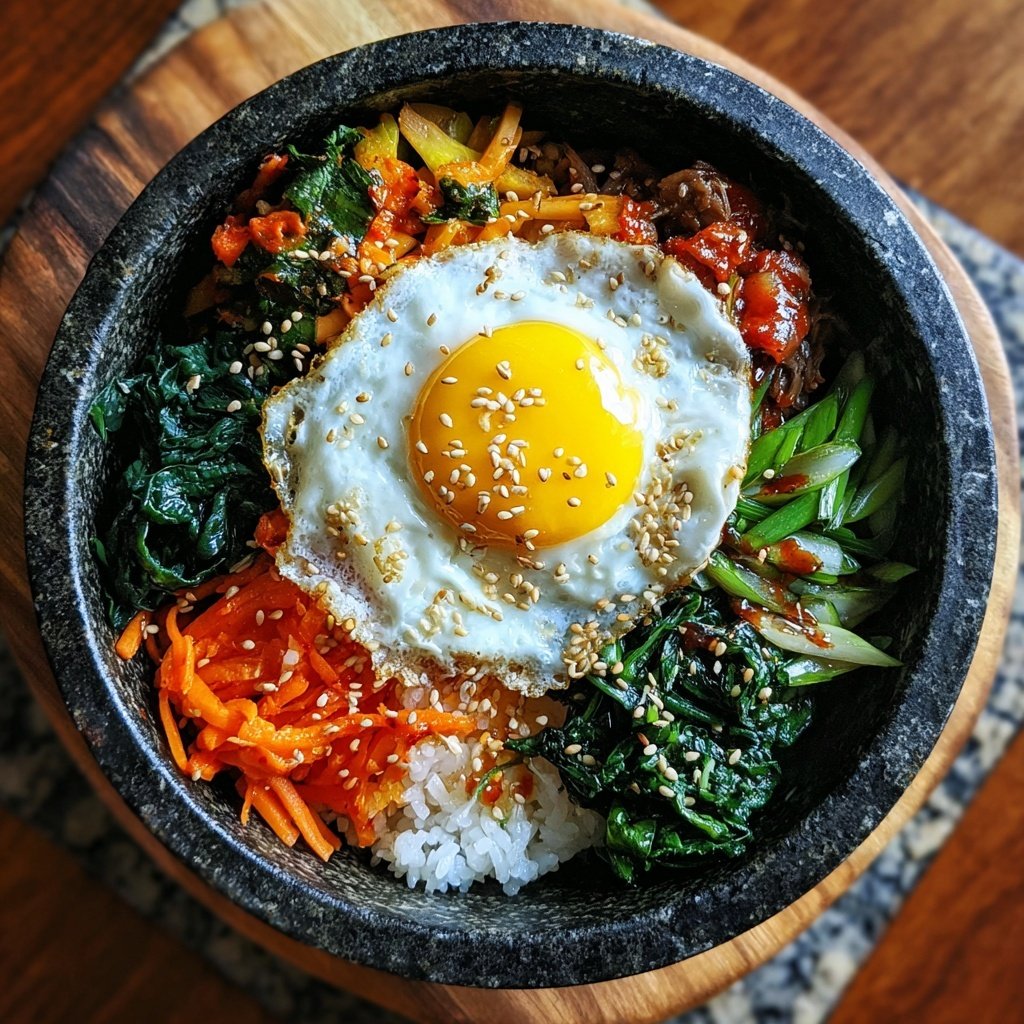
Experience the vibrant flavors of Korea with this traditional Bibimbap, a colorful mixed rice dish topped with an assortment of vegetables, meat, and a spicy gochujang sauce.
Korean Bibimbap is not just a meal; it’s a celebration of flavors and colors. This dish brings together the best of Korean cuisine, providing a delightful balance of textures and tastes. Perfect for family dinners or a special occasion, it allows you to customize ingredients to suit your palate.
Why You'll Love This Recipe
- A colorful array of fresh vegetables and toppings
- Customizable to suit any dietary preference
- Deliciously spicy with the perfect kick from gochujang
The Heart of Bibimbap
Bibimbap is not just a meal; it’s a celebration of flavors and textures. Originating from Korea, this dish brings together various ingredients that each contribute to its unique profile. The combination of vibrant vegetables and umami-rich meats creates a harmonious balance that delights the senses. Traditionally served in a hot stone bowl, the rice gets crispy at the bottom, enhancing the overall experience. Whether you’re enjoying it at a Korean restaurant or making it at home, Bibimbap is a dish that invites creativity and personalization.
What makes Bibimbap particularly special is its versatility. Each ingredient can be tailored to suit individual preferences or dietary needs, making it an ideal choice for gatherings where everyone has different tastes. From adding spicy kimchi to using grilled chicken or even opting for a vegan version with tofu, Bibimbap is an inclusive dish that welcomes all palates. This adaptability not only enhances its appeal but also encourages cooks to get inventive in the kitchen.
Health Benefits of Bibimbap
Packed with a variety of vegetables, Bibimbap is a nutritional powerhouse. Each vegetable used in this dish brings its own set of vitamins and minerals, contributing to a well-rounded meal. Spinach, for example, is rich in iron and antioxidants, while carrots provide a healthy dose of beta-carotene. This colorful array ensures that you’re not only satisfying your taste buds but also nourishing your body with essential nutrients.
Moreover, the protein sources—whether it’s beef, tofu, or egg—offer a balanced intake of protein, essential for muscle repair and overall health. The addition of sesame oil not only enhances the flavor but also provides healthy fats that promote heart health. Bibimbap can easily fit into a balanced diet, making it a fantastic option for those looking to enjoy a delicious meal without compromising on health.
Serving Suggestions
Bibimbap is often served with a side of kimchi, a fermented vegetable dish that adds a tangy kick and aids digestion. The contrast of flavors between the spicy kimchi and the mild Bibimbap creates an exciting culinary experience. For an authentic touch, consider pairing your Bibimbap with a refreshing cucumber salad or a miso soup, which complements the main dish beautifully.
When hosting a dinner party, creating a Bibimbap bar can be a fun and interactive way for guests to customize their bowls. Set out bowls of various proteins, vegetables, and sauces, and let everyone build their own perfect Bibimbap. This not only makes for a lively atmosphere but also allows each person to tailor their meal to their liking, ensuring that everyone leaves satisfied.
Ingrediënten
Ingredients
For the Bibimbap
- 2 cups cooked rice
- 1 cup spinach, blanched
- 1 cup bean sprouts, blanched
- 1 carrot, julienned
- 1 zucchini, julienned
- 4 shiitake mushrooms, sliced
- 1 cup ground beef or tofu
- 4 eggs
- Gochujang sauce, to taste
- Sesame oil, for drizzling
- Sesame seeds, for garnish
Feel free to swap out any vegetables based on your preference or what's in season!
Bereidingswijze
Instructions
Prepare the Ingredients
Start by cooking the rice according to package instructions. While the rice is cooking, prepare all the vegetables by washing, cutting, and blanching them as needed.
Cook the Protein
If using ground beef, sauté it in a pan over medium heat until fully cooked. For a vegetarian option, sauté the tofu until golden brown.
Fry the Eggs
In a separate pan, fry the eggs sunny-side up. The runny yolk adds a creamy texture to the dish.
Assemble the Bibimbap
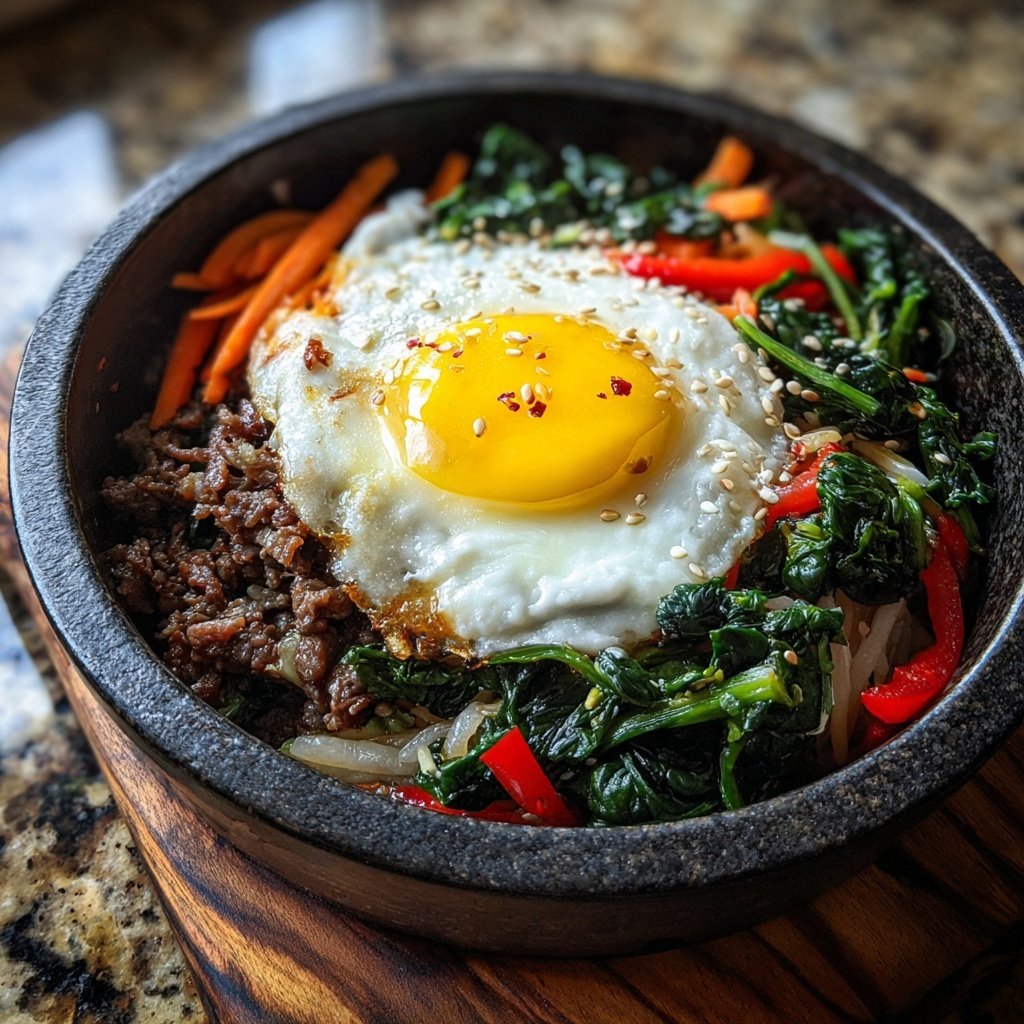
In a bowl, place a serving of rice at the bottom. Arrange the cooked vegetables and protein on top of the rice. Add the fried egg in the center.
Finish with Sauce
Drizzle with sesame oil and add gochujang sauce according to your spice preference. Garnish with sesame seeds.
Mix everything together before eating to combine the flavors!
Professionele Tips
- For an extra crunch, add some toasted seaweed on top before serving.
Storage Tips
If you have leftover Bibimbap, store the components separately to maintain freshness. Keep the rice, vegetables, and protein in airtight containers in the refrigerator. This way, you can enjoy your delicious meal again without losing its vibrant flavors. When reheating, add a splash of water to the rice to prevent it from drying out.
For meal prep enthusiasts, Bibimbap ingredients can be prepared in advance. Blanch the vegetables and cook the rice ahead of time, allowing for quick assembly during busy weeknights. Just remember to fry the eggs fresh for the best texture, as they are best enjoyed warm and runny.
Variations to Try
Experimenting with Bibimbap is part of the fun! Try adding grilled shrimp or marinated chicken for a different protein twist. For a unique flavor profile, incorporate seasonal vegetables such as asparagus or radishes. Each season offers a bounty of fresh produce that can elevate your Bibimbap experience.
If you're feeling adventurous, try a fusion twist by incorporating ingredients from other cuisines. For example, adding roasted sweet potatoes or chickpeas can introduce new textures and flavors. The possibilities are endless, making Bibimbap a dish that can evolve with your culinary creativity.
Vragen Over Recepten
→ Can I make Bibimbap vegetarian?
Absolutely! You can substitute the meat with tofu or additional vegetables.
→ What is gochujang?
Gochujang is a Korean chili paste that adds spice and depth of flavor to many dishes.
→ Can I prepare the ingredients in advance?
Yes, you can prepare the vegetables and protein ahead of time and assemble the Bibimbap just before serving.
→ What can I serve with Bibimbap?
Bibimbap is often served with kimchi and a side of pickled vegetables for added flavor.
Korean Bibimbap
Gemaakt door: Greer Montgomery
Recepttype: Smaken van de Wereld
Vaardigheidsniveau: Intermediate
Eindportie: 4 servings
Wat je Nodig Hebt
For the Bibimbap
- 2 cups cooked rice
- 1 cup spinach, blanched
- 1 cup bean sprouts, blanched
- 1 carrot, julienned
- 1 zucchini, julienned
- 4 shiitake mushrooms, sliced
- 1 cup ground beef or tofu
- 4 eggs
- Gochujang sauce, to taste
- Sesame oil, for drizzling
- Sesame seeds, for garnish
Stappen
Start by cooking the rice according to package instructions. While the rice is cooking, prepare all the vegetables by washing, cutting, and blanching them as needed.
If using ground beef, sauté it in a pan over medium heat until fully cooked. For a vegetarian option, sauté the tofu until golden brown.
In a separate pan, fry the eggs sunny-side up. The runny yolk adds a creamy texture to the dish.
In a bowl, place a serving of rice at the bottom. Arrange the cooked vegetables and protein on top of the rice. Add the fried egg in the center.
Drizzle with sesame oil and add gochujang sauce according to your spice preference. Garnish with sesame seeds.
Extra Tips
- For an extra crunch, add some toasted seaweed on top before serving.
Voedingswaarde (Per Portie)
- Calories: 500 kcal
- Total Fat: 20g
- Saturated Fat: 5g
- Cholesterol: 180mg
- Sodium: 600mg
- Total Carbohydrates: 62g
- Dietary Fiber: 5g
- Sugars: 4g
- Protein: 18g